To
be on the safe side, bring a spare copy of your resume to the
interview. We advise arriving at least ten minutes early as
interviewers are unimpressed by lateness and will rarely accept
excuses from prospective employees.
A
firm (but not bone crunching) handshake with a big smile will do
wonders when you first meet your interviewer. Some small chit chat
from the reception area to the interview room will also help. These
are the vital seconds (not minutes) in making your first impression.
Body
language and
other forms of non-verbal communication are important elements in the
way an interviewee performs. Appearing relaxed and trying to act
naturally is easier said than done but good appearance is mostly a
matter of assuming a position that you are comfortable with. We
suggest sitting up straight, leaning forward slightly and always
maintaining good eye contact with the interviewer or panel. Looking
disinterested will limit your options.
If
offered a drink this can help and can be used as a prop to perhaps
give you some time to answer a difficult question. By accepting a
drink it does show that you are fairly confident and reasonably
relaxed.
Power-pose
your way to interview success
by
Jane McNeill, Director, Hays Australia
The
statistics on how much we communicate through our body language are
widely known and available – one well-known study believes it
accounts for 55 per cent. Your interviewer will certainly be watching
what you communicate through your body language, which could
ultimately affect whether you’re successful.
Your
body language will also have a big impact on your own thinking;
whatever pose you choose to adopt will only further propagate what
you’re feeling.
Research
from Princeton University has
found that by proactively altering your body language you can
actually change your frame of mind. If you’re hunched over and
fidgeting then you’re only going to heighten your anxiety, if
you’re sat straight with your chin up then you’ll exacerbate your
feelings of confidence. “It’s not so much mind over matter as it
is matter over mind,” says our CEO Alistair Cox in this Viewpoint
blog.
Sitting
yourself up for success
You’ve
done as much research as you can about the interviewer and the
business ahead of time – the least that will be expected of you,
you’ve considered the questions that might crop up and thought of a
few of your own, you’ve even planned the outfit that you’re going
to wear – don’t let all this preparation go to waste by adopting
lazy body posture!
Do
you know how much you can tell about someone’s personality simply
by observing how they sit in an interview? Even if you have the
perfect CV and flawless answers to tough questions, negative body
language could be enough to deny you the job. For example, if you are
slouched in the chair, tapping your foot or fidgeting, you’ll come
across as disinterested and, worse, rude.
Your
5 step checklist
With
that in mind, here’s how to use your body language to create as
positive an impression as possible:
1.
Come prepared
Preparation
for an interview always builds confidence and when you’re confident
you have fewer body language issues. If you struggle with confidence
then try just pretending to be confident – this is one of the tips
offered in Susie Timlin’s ‘7 ways to communicate confidence’
blog. Your body language and personality could be the game changer if
you are up against someone with the same qualifications and
experience. Practice it with a friend or family member; tell them
what to look out for.
2.
Wait patiently
You
begin to be judged on your interview performance as soon as you walk
in the door of the building. It’s common practice for the
receptionist to report back to the interviewer on your general
demeanour and attitude; even slouching in the waiting area could cost
you. Spend the short period before the interview thinking about how
you will say hello, all the while sitting in a straight and upright
neutral position.
Our
CEO advises spending five minutes before a big interview or meeting
adopting a “powerful, non-verbal position in private”. Forcing
your body language into this pose helps to make you appear (both to
others and yourself) more confident and able to handle the stress.
3.
Sit confidently
Once
in the interview room rest your arms on the arms of the chair or your
legs and try and keep them there. While using gestures to convey a
point can help show your passion, excessive hand movements can make
it seem like you are trying to express yourself a bit too
frantically; let your words do the talking. Folding your arms and
legs can be seen as an aggressive stance; something which will count
against you if you’re being interviewed for a very social, team
dependent role!
Avoid
touching your face and hair as it distracts the interviewer – they
might think you are not comfortable with the questions being asked.
4.
Maintain eye-contact
Make
lots of eye contact during the interview, both when you are listening
and when you are speaking. It’s a great way to convey a sense of
calmness and control, but don’t go overboard. It’s not a staring
match and it’s normal for the other person to break off contact
throughout the interview. This is a very important form of non-verbal
communication.
5.
Sign-off with a smile
After
you’ve pulled off a flawless verbal and non-verbal interview
performance sign it off with a handshake and a smile. A firm grip,
sustained eye contact, a genuine smile and the usual pleasantries are
the perfect way for the interviewer to remember you.
A
final thought
Even
if you are not feeling confident you can give off the impression that
you are by adapting your body language. Sitting up straight,
communicating clearly, maintaining eye contact and smiling are the
main pillars of body language interview success.
What’s
even more surprising than the fact your body language can affect
someone else’s perception of you is research that shows it can even
affect your own brain chemistry – you can hear more on this in Amy
Cuddy’s TED talk.
The
interview will be the primary method of selection for the majority of
positions we recruit. Below are some suggestions that, together with
guidance from our staff, may help you to improve your interview
performance for the greatest chance of success.
What
is a potential employer commonly trying to assess?
In
every interview, no matter how junior or senior the position, the
interviewer will likely
be probing for the answers to three basic questions:
Can
you do the job well? (Your skills, qualifications, experience)
Will
you do the job? (Your motivation, attitudes and career goals)
Will
you fit into the team? (Your cultural match)
Preparation
The
better prepared you are, the more relaxed and comfortable you will be
when the interview questions begin.
Developing
an understanding of the business before the meeting can be a vital
component of securing a role. Handy information can often be found
from the company website, annual reports, and a simple internet
search. LinkedIn is another valuable tool but don’t be tempted to
send a LinkedIn connection or Facebook friend request to your
interviewer!
It
is common for one of the first interview questions to be “what do
you know about our us?”.
It
is also valuable to spend some time reviewing your own CV and have a
clear understanding of how the key responsibilities and achievements
of your prospective role link to your previous employment.
Focus
on the skills you believe offer most value to your prospective
employer. Whenever possible, relate your skills and experience to the
role requirements and always have practical examples ready to support
your statements. Be aware, particularly for senior candidates, there
can be an idea that “my experience or results speak for
themselves”. Remember that job interviews are a competitive
process, so give yourself the best chance by explaining not only what
was achieved but how you made it happen.
Review
some probable answers to likely questions in the interview. Provide
answers that are tailored to the position and paint a picture of you
as being positive and with the potential to add value. It is also
essential that you prepare your own questions so that, not only can
you be sure that this is the right opportunity for you but also so
that you can demonstrate you are particular in regard to the
opportunity you are looking for.
Always
treat the interview as a two-way discussion and answer questions
honestly, directly and keep to the point. Everyone present will be
focusing their attention on you, so clouding your answer with jargon
or evading the issue will be more obvious than you think. If you are
not certain about a particular question, do not be afraid to ask if
it can be rephrased. Listen, never interrupt and answer only what is
asked.
The
little things
Presentation
can have a large influence on first impressions. Always attend an
interview in corporate attire and if in doubt always err on the side
of more formal as opposed to underdressed.
Be
clear about the exact time, date and location of the interview as
well as who you are meeting and be there five to ten minutes before
the interview.
Listen
as well as talk. This will give you valuable clues as to the
responses required. Wait for the question to be concluded before
commencing your response.
Be
aware of your body language. Interviewers will pick up on a lack of
congruence between what your mouth your body are saying.
Answer
questions informatively but briefly. Never embellish the truth but
don’t be afraid to sell your skills and accomplishments.
Avoid
negativity in statements and body language. Interviewers look for
positive, likable people and any persistent negative characteristics
such as a lack of interest, enthusiasm or purpose regarding your
career will reflect poorly.
End
of the interview
At
the end of your interview, smile and thank the people involved for
their time. While decisions and job offers are usually made some time
after the interview(s), so it would not be appropriate to ask for an
assessment of your performance.
During
an interview, it’s customary for you to get a chance to ask your
own questions to find out whether the company is a good fit for you.
This is the perfect opportunity to work out whether it’s the job
you’ll love.
Ask the interviewer what the traits of
successful people in this company are and compare it to what you’ve
established about yourself. This should help you work out if you’d
fit in with the existing team.
Working on finding a job
you’ll love is about more than just your duties. Organisational
structure, company culture and employees’ insights will all play a
role, so make sure you’re doing all you can to work out where you
think you’ll be happiest.
‘Do
you have any questions for us?’
Towards
the end of the interview, you will usually be asked if you have any
questions of your own. Be confident when asking your questions and
use them to score additional points in your favour.
Examples
include:
Why
is the position available?
What
training and induction will be given?
What
prospects are there for personal and professional development?
What
are the company plans for the future?
When
can I expect to hear from you?
What
skills and attributes do successful people at your company usually
have?
What
do you like best about working at the company?
What
results are expected from me?
What
specific problems are you hoping to solve during the first six
months?
Your
dream job is out there, somewhere; you’ve just got to find it. And
according to the Australian
Bureau of Statistics there
are plenty of options for you. In May this year there were
approximately 146, 000 job vacancies in Australia, up 2.1% from
February, and whilst it’s likely that out of all those positions
there are some that don’t fall into that dream category of yours,
unless you’re blessed with some kind of inhuman super job scouring
strength, you won’t necessarily even be in a position to know.
Figuring
out how to separate the wheat from the chaff in the job market can
seem like a task of biblical proportions for your average job seeker,
but for those willing to take advantage of the technologies available
to them, finding the perfect role is more possible now than ever
before.
top
tip 1: use your mobile
According
to research conducted by Google and Ipsos Media in 2013, 77% of
Australians don’t leave their homes without their device.
Furthermore, 82% of the population uses their phone on the go with
75% also using a device at work. Needless to say, and as the ‘Our
Mobile Planet: Australia’
report finds, smartphones are “indispensable to daily life”.
So
how can your smartphone help you find that once in a lifetime role?
Start
by using an effective platform to search for jobs. Sites that are
optimised for mobile use don’t just look like miniature versions of
a website, they are fully responsive, which means jobs are easy to
view no matter where you are or what device you use. Features to help
you find the right jobs include those on the new Randstad website
like:
If
you’re prepared, applying directly via a mobile device is
oftentimes more efficient than using a desktop computer.
top
tip 2: optimise your CV
Scott
Belsky,
Vice President of Community at Adobe, says, “Optimisation isn’t
about making drastic changes…the key to optimisation is making
incremental tweaks…” As such, you don’t need to reinvent your
CV to get the most out of it; you just need to optimise it. According
to Google’s ‘The
New Multi-screen World’
report, 90% of people move between devices to accomplish a goal, so
having a version of your CV saved to your mobile device will greatly
decrease barriers that prevent you from applying to a job ad at a
minute’s notice.
Users
can also use cloud technology such as Google Drive, Dropbox and We
Transfer to store and send resumes. Increasingly, employers are
enabling job seekers to apply through sites such as LinkedIn and The
Loop, which means you should ensure your CV is adaptable across
multiple social platforms. If you choose to host your CV on a
website, you may also wish to include key words and a simplified
bullet point structure.
top
tip 3: personalised search
Lastly,
make searching for jobs even more efficient by taking advantage of
the personalised search feature on the new Randstad website. Once you
have created a myrandstad account, allow the technology to find
relevant jobs for you based on your previous searches.
As
the trend towards mobile continues to penetrate the recruitment
industry, smart job seekers will get ahead by essentially automating
processes. By using mobile devices, having their applications
optimised for all opportunities and relying on recommended job ads
based on previous user behaviour, these applicants are in a better
position to find their dream job than those with no considered
approach to utilising the technology around them.
Have
you always wondered why your friends and colleagues seem to get that
tap on the shoulder with amazing jobs offers, with perks and career
progression?
You
work hard, but sometimes, you feel a bit un-noticed. It’s
time to get noticed! Here
are 5
tips to
help you on the way to being head hunted.
1.
Your personal brand
We
hear a lot about our own personal profile, and in a world of social
media and communication apps, it is more important than ever to have
a clean and clear online image that really reflects who you are and
what you stand for. Your whole online presence is an ever changing
resume, so keep it nice, and aim for continuity, integrity and
interesting content.
2.
Work beautifully
The
very best recommendations will come from ex-colleagues, and managers,
or even suppliers and customers. Remember the customer whose problem
you solved? Remember when you didn’t yell at your supplier, but
helped them resolve the issue? Remember when you created a new
strategy and shared the credit with your team? If you work well with
others, are highly regarded, and even if you work in a seriously
difficult situation – the way you operate every day is your best
advertisement.
3.
Align yourself with influencers
Influencers
are those people with a great profile online and excellent social
connections. They know other ‘power’ people and often have senior
roles. Most importantly, they are well respected in their space. They
would be the type of people you would use as referees and they will
naturally want to recommend you if they get the chance. Pay it
forward, do a good deed, share a post of theirs – show them that
you are engaged in their world.
4.
Be visible & approachable
Get
out there, go to industry events and start talking with people. Catch
up for a coffee with contacts in industries that interest you. Make
connections via Linkedin, start talking
to recruiters,
use your personal network as well. If the opportunity comes up, you
can mention that you are open minded to new opportunities.
Reciprocate too, if people ask you out for a coffee, take every
opportunity, you never know where it will lead. Be generous with your
time and support and don’t forget to switch your Linkedin profile
to ‘open to opportunities’ to get the word out. (Need
Linkedin profile advice?)
5.
Keep your cool
When
all the elements combine and you get that delicious mystery phone
call with a job opportunity to explore, try not to get too excited
and accept the role! A head hunter will make the first tenuous steps
of communication after a swag of research. They already think you are
a good option. You need to strongly consider whether the role is a
genuine fit for you, in terms of wages, culture, industry and more.
Most importantly, you need to understand that they are not ‘offering’
you the role, but just the chance to discuss and interview for it.
Don’t be so flattered that you want to take the role straight away-
this will actually send a red flag to the head hunter and could make
you look a bit desperate.
By
keeping these 5
points uppermost
in your mind and being aware of the way you operate in your work and
social life, you are well on the way to being head hunted. If you are
working well and enjoying life, people will be drawn to you and
exciting opportunities will start to drop into your lap!
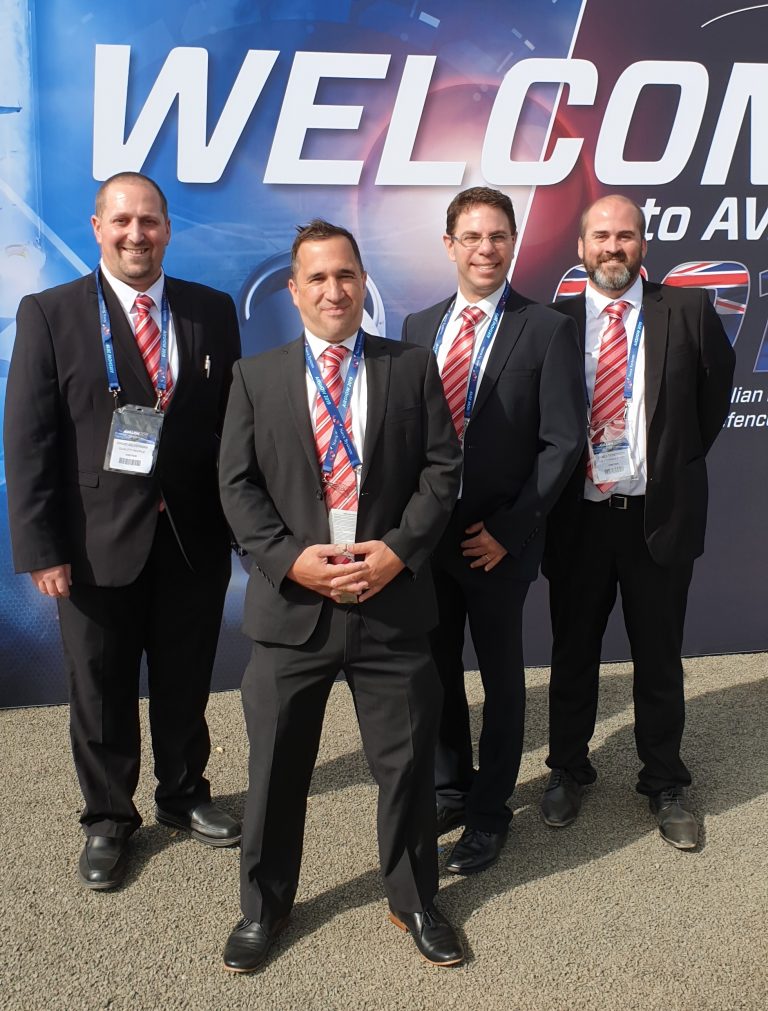
Quality People was proudly represented at the Avalon Airshow 2019 by David, Darren, Dom and James. Despite the 40 degree heat, we created a significant stir with our matching ties, attracting attention at every turn!
Quality People has been a significant player in the Defence industry for many years. With well established networks, connections, and an extensive talent pool; we have become a recruitment agency of choice in the Defence Industry.
Please contact us at jobs@qualitypeople.com.au to find out how we can partner with your business to solve your recruitment needs.
Lessons we can learn from Disney and how we
can apply them to our business lives
What is better
than cuddling up with your daughter, watching a Disney movie on a rainy
Saturday afternoon? A few years ago, I had the pleasure of watching Disney’s
Cinderella in such circumstances.
One thing puzzled
me during that movie. Why did Ella’s (Cinderella’s) mom wait until she was on
her deathbed before she shared her wisdom?
“a great secret that will see you through all the
trials life has to offer… have courage and be kind”
In this modern-day
Cinderella remake, the message is so different from previous versions, that is
what makes this one so refreshing and relevant. Today’s version is more of a
young woman whose naiveté is far sweeter when accompanied by her steely resolve
to achieve success no matter what.
After her dear
mother dies, Ella is courageous and she is kind to everyone, including her
cruel and twisted stepmother and stepsisters who continually bully and belittle
her.
Sure, Cinderella
looks stunning but it’s more her inner beauty that captures attention – her courage and her kindness. Everyone has
inner beauty, and it’s not only the stuff of fairy tales.
Since that day,
the last thing I say to my daughter as I tuck her into bed each night is “have
courage and be kind”. What better motto for a child growing up? One day she may
be a businesswoman, a leader in the community, and hopefully she will carry
this motto with her and apply it to everyday situations.
Kindness: “the
quality of being friendly, generous, and considerate.”
Courage: “the quality of mind or spirit that enables a person to face difficulty, danger, or pain without fear.” I explain courage to my daughter as “doing something even when you’re scared to do it”
At first it might
seem odd to merge kindness and courage together as core values but if you stop
and think about it those two characteristics, when blended together they can
help you get through most life situations. Kindness helps you appreciate others,
even when they may not act in a way that appears to deserve that tolerance.
Courage helps you live with integrity, even when you are fearful of the consequences.
We need to have courage
and kindness in our lives and often we need them both in the same moment – for
example, at times in our lives it will take great courage to treat someone well.
It will also take great courage to know when to walk away from situations or
people that aren’t good for you. Ultimately it will take kindness to
forgive and walk away without feelings of malice or anger. Courage is what
helps you to continue moving forward with your life.
How can we have courage when others mistreat us? Why should we be kind to those who are cruel?
Let’s face it, life isn’t a fairy-tale. People will
mistreat you, sometimes for no good reason besides to see you fall. Cinderella chose
to act bravely and kind because she was a princess – not by blood, but a true
princess at heart.
Sometimes,
the life you live becomes your downfall. Your daily life can become so rough
that you begin to lose sight of your personal values. Increasing stress and
demands threaten to rob you of your passion for achieving your happiness.
Some
people come into your life and you want them to stick around forever, but they
don’t. Pressures start out small, but they build continuously. It is important
not to lose sight of what makes you special and what got you where you are.
You
have a choice to make in the face of corporate bullying. Do you choose to
continue to allow yourself to be broken down and destroyed? Or will you rise
above it, making use of your core values and beliefs?
So, when you encounter bullies at school, home or
at work, remember this: Cinderella rose above, remaining hopeful and kind until
things finally worked
out in her favour. She is not weak; she is resilient and strong.
Kindness is not weakness – it is strength
Have
the courage to remain kind. Stand proud when life begins to pull you down. Try
not to become bitter; that is letting the bad guys win. Stay humble in the face
of the too-proud.
This
is not to say you should become a doormat. Stand up for yourself and for what
is right in the face of so much wrong. Just do it in a way that maintains your values.
Two wrongs never make a right.
Video job interviews are an increasingly common part of the hiring
process. In substance, the content of video interviews are similar to in-person
or phone interviews.
Companies
see many benefits in
using video technology to vet candidates. With a video interview, you have most
of the benefits of seeing a candidate in person, but without the hassle/expense
of actually meeting them (especially if someone would have to fly or drive to a
different city).
Preparation
Do your research as you
would for a face-to-face interview. Prepare by researching the company, reviewing the
job requirements and rehearsing possible interview questions.
Set up and test your
technology. Video
interviews are not only for tech savvy millennials, the software is
straightforward and accessible for everyone. It can also be done on any device
including a PC, tablet or smartphone, so choose the technology you feel most
comfortable with.
Set up and
test your webcam or smartphone camera.
Set up and
test the microphone.
Ensure
your internet and bandwidth is capable of handling a video link, and that you
have enough data.
Check
your battery, if your device is not fully charged you could plug it in
throughout the interview.
If any
software or apps or required for the interview, ensure you have downloaded it
well in advance.
Video
interviews will typically give you the option of using a telephone connection
for volume, or the sound will be available through the video link. Ensure you
have tested both methods prior to the interview.
Things
can go wrong with technology, and Murphy’s Law unfortunately isn’t in your
favour. Before the interview, ask the interviewer for a phone number where you
can reach them if you experience technical difficulties. If the video cuts out,
call them at that number. Ask if you can continue the interview by phone or if
you can reschedule.
Find the perfect
location. You want
your interviewer to focus on you and not be distracted by your background.
Lighting is critical. Run a trial
run, filming yourself and consider whether the lighting flatters you. Avoid bright
lights behind you or dark shadows on your face.
Ensure there is nothing on the
bookshelf, wall, or your computer screen behind you that you wouldn’t want an
employer to see.
Avoid interruptions. You don’t
want background noise from the TV, your kids or dog. If you’re not the only one
at home we suggest you brief everyone in advance, and even go as far as locking
the door.
Body Language counts!
Eye
contact is crucial during an in-person interview, so too during a video
interview. Eye contact in a video takes some practice. It’s important to avoid
the instinct to look directly at your interviewer on the screen while you’re
answering a question. Instead, when you speak, look towards at the webcam. A
good trick is to resize and move the window with the person’s video image as
close to your webcam as possible.
By doing this, your eyes are more likely
to align with the interviewer’s eyes on the other end. When you’re
listening, you can look at the interviewer on the screen. Avoid letting your
gaze drift away from the device. Also try avoid staring serial-killer style!
Throughout the interview, convey optimism with an upbeat mood and positive body language. One way to achieve this is to have good posture. Sit in your chair with your back straight and your shoulders open. Feet can be planted on the floor and arms can rest in your lap or on the desk. Find a nice, comfortable balance between leaning forward and reclining too far back.
When you’re listening, nod and smile
when appropriate, use hand gestures when required and keep your movements close
to your body. Some gestures that are fine in person can be distracting on
video. Try not to twirl your hair, touch your forehead, chin or nose.
Try
not to be too goofy or laugh at every joke. The smile is meant to be a tool to
show that you’re a pleasant person to work with, you have reasonably good
social awareness, and have a good dose of enthusiasm and confidence.
Have
a glass of water handy. If your voice goes croaky, or if you simply want to
pause for a moment to gather your thoughts before you answer a question – a
glass of water is a perfect tool.
At the conclusion of the interview
As with any job interview, you should conclude by thanking the
interviewer for their time. As you don’t have the option of a hand shake, a
smile goes a long way.
The interview will be the primary method of selection for the majority
of positions we recruit. Below are some suggestions that, together with
guidance from our staff, may help you to improve your interview performance for
the greatest chance of success.
What is a potential
employer commonly trying to assess?
In every interview, no matter how
junior or senior the position, the interviewer will likely be probing for the
answers to three basic questions:
Can
you do the job well? (Your skills, qualifications, experience)
Will
you do the job? (Your motivation, attitudes and career goals)
Will
you fit into the team? (Your cultural match)
Preparation
The better prepared you are, the more relaxed and comfortable you will
be when the interview questions begin.
Developing an understanding of the business before the meeting can be a
vital component of securing a role. Handy information can often be found from
the company website, annual reports, and a simple internet search. LinkedIn is
another valuable tool but don’t be tempted to send a LinkedIn connection or
Facebook friend request to your interviewer!
It is common for one of the first interview questions to be “what do you
know about our us?”.
It is also valuable to spend some time reviewing your own CV and have a
clear understanding of how the key responsibilities and achievements of your
prospective role link to your previous employment.
Focus on the skills you believe offer most value to your prospective
employer. Whenever possible, relate your skills and experience to the role
requirements and always have practical examples ready to support your
statements. Be aware, particularly for senior candidates, there can be an idea
that “my experience or results speak for themselves”. Remember that job
interviews are a competitive process, so give yourself the best chance by
explaining not only what was achieved but how you made it happen.
Review some probable answers to likely questions in the interview. Provide
answers that are tailored to the position and paint a picture of you as being
positive and with the potential to add value. It is also essential that you
prepare your own questions so that, not only can you be sure that this is the
right opportunity for you but also so that you can demonstrate you are
particular in regard to the opportunity you are looking for.
Always treat the interview as a two-way discussion and answer questions
honestly, directly and keep to the point. Everyone present will be focusing
their attention on you, so clouding your answer with jargon or evading the
issue will be more obvious than you think. If you are not certain about a
particular question, do not be afraid to ask if it can be rephrased. Listen,
never interrupt and answer only what is asked.
The little things
Presentation
can have a large influence on first impressions. Always attend an interview in
corporate attire and if in doubt always err on the side of more formal as
opposed to underdressed.
Be
clear about the exact time, date and location of the interview as well as who
you are meeting and be there five to ten minutes before the interview.
Listen
as well as talk. This will give you valuable clues as to the responses
required. Wait for the question to be concluded before commencing your
response.
Be
aware of your body language. Interviewers will pick up on a lack of congruence
between what your mouth your body are saying.
Answer
questions informatively but briefly. Never embellish the truth but don’t be
afraid to sell your skills and accomplishments.
Avoid
negativity in statements and body language. Interviewers look for positive,
likable people and any persistent negative characteristics such as a lack of
interest, enthusiasm or purpose regarding your career will reflect poorly.
End of the
interview
At the end of your interview, smile
and thank the people involved for their time. While decisions and job offers
are usually made some time after the interview(s), so it would not be
appropriate to ask for an assessment of your performance.
How to
answer the dreaded “Tell me about yourself” question in an interview
Regardless of your industry, your experience level and your job type, some interview questions are almost guaranteed to come up. At the top of this list is the classic “Tell me about yourself…”
This
question is almost always asked first, straight right after some chit chat
about traffic or the weather. Since it’s often the first real question to be
asked in an interview, it’s your big chance to make a first impression with a
well-rehearsed answer.
View this question
is an opportunity, an opening for you to set the tone and emphasise the points
that you most want your potential employer to know about you. It’s an
opportunity to create a bold impression with your strongest selling points. Don’t
waste the opportunity by diving into a nervous stream of consciousness,
rehashing your resume or expressing your love for scrapbooking.
This is also an
opportunity to show that you can handle tough questions in a pressurised
situation. Be aware of your body language, your posture, eye contact, hand
gestures and your overall demeanour. Sometime the wording of your answers is
less important than creating the impression that you’d be able to stand in
front of the Board and successfully present the PowerPoint which will determine
the success or otherwise of the project.
The
Interviewer’s view point
When interviewers ask you, “Tell
me about yourself”, what are they trying to achieve? Well, for the
interviewer, it’s an easy and open-ended way to start the conversation, to
break the ice, to allow your nerves to settle, and to assess your ability to
respond concisely with an answer you’ve had time to prepare. Remember that in
most cases the interviewer really wants to like you. Their life will be easier
if they can find a great candidate quickly. Help them like you!
Do’s
and Don’ts for answering “Tell Me About Yourself”
Don’t rehash your resume in fine detail — Many candidates nervously
respond by launching into a recitation of their resume from the very beginning.
That can turn into a very long monologue that starts with their oldest and
least relevant experience. By the time you get to the good stuff, your
interviewer has zoned out and is thinking about the cricket score.
It’s
important to prepare a brief summary of the high points of each of your past
positions. Make sure you emphasise the points that are relevant to the role
you’re applying for.
Even
if the interviewer specifically asks you to “walk him
through your resume,” don’t take the suggestion too literally.
You can still lead with your elevator pitch and then an overview of your most
recent position. Leave plenty of opportunities for the interviewer to jump in
and engage with you throughout the rest of the interview.
Find the balance between confidence and bragging – Try not to make
the mistake of being too modest, nor too arrogant. Without bragging, provide a
response that demonstrates your confidence and communicates your qualifications.
Remember that by simply being in the interview you’re already ahead of the majority
of applicants whose CV’s were discarded. You’re there because you deserve to be
there.
Being
comfortable with “selling” yourself is a tricky art, but don’t be too humble. Competition
for any good job is fierce. Don’t rely on the interviewer to see past your
humble exterior and figure out how great you are.
If
you take time to prepare, you can find a way to present yourself to full
advantage while staying true to your personality. For modest types, I recommend
focusing on factual statements.
You
don’t have to brag, don’t go with “I’m the best salesperson in the
world.” Instead, you can say “I led my
division in sales for the last three years and was able to bring in 50% of overall
new business during that time.”
Don’t ramble. If, after you’ve been talking for a while, you think you might
be rambling it means you probably are. Nerves are normal and they affect us you’re
your response should be ideally less than a minute, and no more than 2 minutes.
You
won’t be able to fit all of your great qualities and resume highlights into 2
minutes, so you’ll have be selective in what you include. Emphasise your past
experiences that directly relate to the responsibilities of the role you’re
applying for.
You
could reinforce the number of years of experience in a particular industry or
area of specialisation. You might also highlight special training and technical
skills here. Focus on the qualifications in the job description and how you
meet and exceed the requirements.
You
can wrap up your answer by indicating why you are looking for a new challenge
and why you feel this role is the best next step.
The “Tell
Me About Yourself” formula
There are three
components to answering this question:
1. Who
You Are — Your first sentence should be an introduction to who
you are professionally, an overview statement that shows off your strengths and
gives a little sense of your personality too. This is not easy to do gracefully
on the fly. It pays to prepare a bit in advance.
Good: “I’m an innovative Finance Manager with 12
years of experience managing all aspects of the Finance function in a variety
of industries. My roles range from preparing and presenting month-end data, to
analysing expenses to develop cost-saving initiatives.”
Bad: “Well, I grew up in South Africa. As a
child, I originally wanted to be a game ranger, then later I became interested
in playing cricket. I excelled in the games from early on, placing first in my
fourth-grade Simon Says competition. Funny story about that…”
2. Expertise Highlights —
Don’t assume that the interviewer has closely read your CV and knows your
qualifications. Use your elevator pitch to briefly highlight 2-4 points that
you think make you stand out. Make sure you only speak about tasks you’ve done
that will be relevant in the eyes of your potential future employer.
Good: “I have spent the last six years honing my
skills as a Financial Controller for a global retail brand, where I have won
several performance awards and been promoted twice. I love managing teams and
solving problems.”
Bad: “My first job was as an accountant preparing
tax returns for people much richer than me. I learned a great deal in that role
that served me well over the next 16 years. At the time, I wasn’t sure about my
career path, so I next took a position selling cupcakes at markets. It only
lasted for six months, but I enjoyed it thoroughly. Especially the chocolate
ones”
3. Why
You’re Here — End by telling them you want the position and why. Be concise
and positive, don’t be too candid, uncertain, or negative.
Good: “Although I love my current role, I feel I’m
now ready for a more challenging assignment and this position really excites
me.”
Bad: “Because of the company’s financial problems
and my boss’s personal issues (you know she’s going through a messy divorce),
I’m worried about my job’s stability and decided to start looking for new
opportunities.”
Remember that you
will have time later to walk through your resume in greater detail and fill in
any gaps that you don’t cover in this answer. Don’t try to squeeze in too much
information or your interviewer will start to tune out, make sure you keep
their attention with a concise and relevant response.
A good interview is
a dialogue not a monologue. Keep your responses concise and give your
interviewer the chance to dive in and ask questions later.
Practicing your
answer over and over will be the key to success, use the mirror and a stopwatch
as tools for success.